
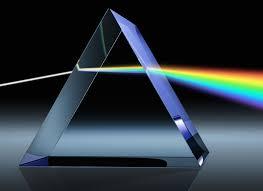
When people think about a prism, they often imagine a simple glass block that bends light into colorful rainbows. While that image is accurate in a classroom, modern optical systems demand far more from a prism. Cameras, binoculars, microscopes, medical equipment, AR devices, and industrial instruments all rely on precision prisms to guide light accurately.
Yet many engineers and equipment users encounter an unexpected problem. Over time, image quality drops, alignment shifts, or light transmission decreases. The first instinct is often to blame the entire optical device. In reality, the issue may involve the prism itself—or more accurately, how it interacts with the rest of the optical system.
Think of a prism as the traffic controller of light. If the controller receives confusing instructions or the roads develop potholes, traffic slows down regardless of how skilled the controller is.
Let's examine the real reasons why prism performance can decline and what professionals should consider before replacing expensive optical equipment.
A Prism Cannot Compensate for Poor Optical Design
A common misconception is that installing a high-quality prism automatically improves image quality.
In practice, every optical system works as a complete unit that includes:
- Optical lenses
- Mirrors
- Light source
- Mechanical alignment
- Optical coatings
- Image sensor
If one component introduces errors, the prism cannot eliminate them.
Precision optics depend on system-level engineering rather than a single premium component.
Optical Misalignment Creates Unexpected Image Problems
Even a perfectly manufactured prism performs poorly when alignment changes.
Small mechanical shifts may occur because of:
- Continuous vibration
- Mechanical shock
- Improper assembly
- Temperature changes
- Wear in mounting structures
These tiny movements can produce:
- Blurred images
- Reduced sharpness
- Double images
- Beam deviation
- Lower measurement accuracy
In precision instruments, alignment tolerances often measure only a few micrometers.
Surface Contamination Reduces Light Transmission
Optical surfaces attract dust, fingerprints, oil, and airborne particles more easily than most people realize.
A contaminated prism may experience:
- Lower light transmission
- Increased light scattering
- Reduced image contrast
- More stray reflections
Ironically, many users spend thousands upgrading optical equipment while forgetting to clean the optics properly.
A clean prism often performs far better than an expensive dirty one.
Optical Coatings Require Proper Protection
Many precision prisms include anti-reflective or reflective coatings that improve optical efficiency.
These coatings help by:
- Reducing reflection losses
- Increasing light transmission
- Improving image contrast
- Controlling unwanted reflections
However, improper handling or harsh cleaning chemicals may damage these delicate layers.
Manufacturers generally recommend approved optical cleaning methods instead of household cleaning products.
Temperature Changes Affect Optical Performance
Glass expands and contracts slightly as temperatures change.
Although these changes remain very small, precision optical systems may notice the effects.
Large temperature variations can influence:
- Optical alignment
- Mechanical mounting
- Beam positioning
- Measurement accuracy
This explains why industrial optical equipment often includes thermal management or operates within controlled environmental conditions.
Temperature itself rarely damages a prism, but sudden or repeated changes may influence overall optical stability.
Material Quality Matters More Than Appearance
Two prisms may look identical from the outside while performing very differently.
Manufacturers evaluate optical materials based on properties such as:
- Refractive index consistency
- Internal optical homogeneity
- Surface accuracy
- Scratch and dig quality
- Transmission characteristics
Small manufacturing differences can significantly affect imaging performance in high-precision applications.
Industry standards published by ISO and MIL-PRF specifications help manufacturers verify optical component quality.
Mechanical Stress Can Distort Optical Accuracy
Improper mounting creates another overlooked problem.
When excessive force clamps a prism into position, the glass may experience mechanical stress.
This stress can introduce:
- Optical distortion
- Image deformation
- Polarization effects
- Reduced measurement precision
A prism performs best when engineers support it securely without introducing unnecessary pressure.
Regular Maintenance Extends Prism Performance
Precision optics benefit from routine inspection rather than reactive repairs.
A practical maintenance checklist includes:
- Inspect optical surfaces regularly.
- Clean using approved optical materials.
- Verify mechanical alignment.
- Protect components from impact.
- Store equipment in controlled environments.
- Replace damaged optical coatings when necessary.
Preventive maintenance often costs far less than replacing an entire optical assembly.
Common Prism Problems and Their Causes
| Problem | Likely Cause |
|---|---|
| Blurred image | Optical misalignment |
| Lower brightness | Surface contamination or damaged coating |
| Image distortion | Mechanical stress or mounting error |
| Reduced contrast | Dirty optical surfaces or stray reflections |
| Beam deviation | Alignment shift or thermal expansion |
Why System Design Always Matters
Engineers rarely evaluate a prism in isolation because every optical component influences final image quality.
Successful optical systems combine:
- Precision prism manufacturing
- Accurate alignment
- High-quality coatings
- Stable mechanical support
- Proper environmental control
Ignoring any one of these factors reduces the performance of the entire system.
That is why professional optical designers optimize complete optical paths rather than individual components.
Final Thoughts
A prism remains one of the most reliable and important components in modern optical systems. From industrial inspection equipment to medical imaging and advanced display technologies, its role extends far beyond bending light.
However, declining optical performance usually results from multiple interacting factors instead of a defective prism alone. Alignment, coatings, cleanliness, mounting, temperature, and system design all influence the final image.
Before replacing an optical component, investigate the complete system. In many cases, proper maintenance and careful alignment restore performance without major expense.
After all, even the finest prism cannot perform its best if the rest of the optical system refuses to cooperate.

 English
 Arabic
 French
 Spanish
 Portuguese
 Turkish
 Dutch
Dutch
 Italiano
 Russian
 Romaian
 Portuguese (Brazil)
 Greek
Greek