
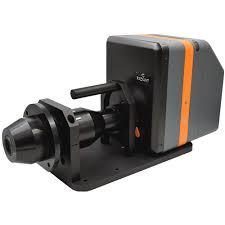
In high-end display manufacturing, measuring the viewing angle is a constant battle for accuracy. You likely face "edge distortion" where the luminance data at the periphery of your sensor does not match the central focal point.
Many B2B testing labs struggle with stray light contamination during high-speed inspections. If your current conoscope lens lacks proper internal baffling, your contrast ratio data will be artificially lowered by reflected photons.
Thermal drift in the lens assembly can also ruin long-term calibration. For engineers, finding an optical system that maintains its numerical aperture and focus over thousands of duty cycles is the primary roadblock to efficiency.
Solving the "Vignetting" and Edge Drop-off Problem
The most common grievance when using a conoscope lens is the loss of light intensity at high angles. In B2B display testing, if your lens cannot capture light at $\pm$80° with uniform sensitivity, your color-shift data becomes unreliable. This "vignetting" effect often forces engineers to use complex software offsets that introduce more room for error.
To solve this, the lens must be designed with a telecentric optical path on the image side. This ensures that the chief rays strike the sensor at a near-normal angle, regardless of the emission angle from the display. By matching the lens's entrance pupil to the display's emission characteristics, you eliminate the "dark corners" on your sensor and get a true map of the viewing angle performance.
Eliminating Stray Light and Internal Flare
In a laboratory environment, even a small amount of internal reflection can destroy the integrity of your measurement. If your conoscope lens shows "ghosting" when measuring high-brightness Micro OLEDs, the problem is usually the internal barrel design or the coating quality.
The technical solution involves:
-
Deep-V Baffling: Machining micro-grooves inside the lens barrel to trap stray light before it reaches the sensor.
-
Super-High Contrast Coatings: Utilizing Vantablack-type coatings on non-optical surfaces and multi-layer AR coatings on all glass elements.
-
Fourier Transform Optimization: Ensuring the lens correctly maps the angular distribution to the spatial distribution on the CCD/CMOS without spherical aberration.
Mastering Thermal Stability for 24/7 Inspection
In automated production lines, the conoscope lens is often mounted near heat-generating electronics. If the lens housing expands, the "focal plane" shifts, causing your angular resolution to blur. This leads to false "fails" during quality control, which increases waste and lowers your bottom line.
Using athermalized lens designs is the professional fix. This involves selecting a combination of glass types and mechanical spacers (like Invar) that counteract each other’s thermal expansion. This ensures the "angular-to-spatial" mapping remains constant, even if the ambient temperature in the factory fluctuates by 10°C or more.
Achieving High Angular Resolution
A frequent B2B bottleneck is the lack of "fine detail" in the conoscopic image. If your lens has a low Numerical Aperture (NA), you won't be able to resolve the tiny color variations in high-PPI (pixels per inch) displays.
To solve this, you must specify a lens with a large front element and high-index lanthanum glass. This allows for a wider "collection cone" of light. By increasing the NA, you improve the spatial frequency response, allowing your testing equipment to detect subtle "mura" or pixel-level defects that a standard lens would simply smooth over.
Technical Solutions for Conoscopic Measurement
| Measurement Problem | Underlying Cause | Optimized B2B Solution |
| Data Inconsistency | High Angular Vignetting | Telecentric Optical Design |
| Reduced Contrast | Internal Ghosting/Flare | Multi-layer BBAR + Baffling |
| Calibration Shift | Thermal Defocusing | Athermalized Housing (Invar) |
| Low Image Detail | Insufficient NA | High-Index Lanthanum Optics |
Conclusion
As a leading manufacturer and supplier, Arvroptical provides high-precision conoscope lens units. We solve your B2B testing hurdles with custom optical paths and rugged, stable designs.

 English
 Arabic
 French
 Spanish
 Portuguese
 Deutsch
 Turkish
 Dutch
Dutch
 Italiano
 Russian
 Romaian
 Portuguese (Brazil)