
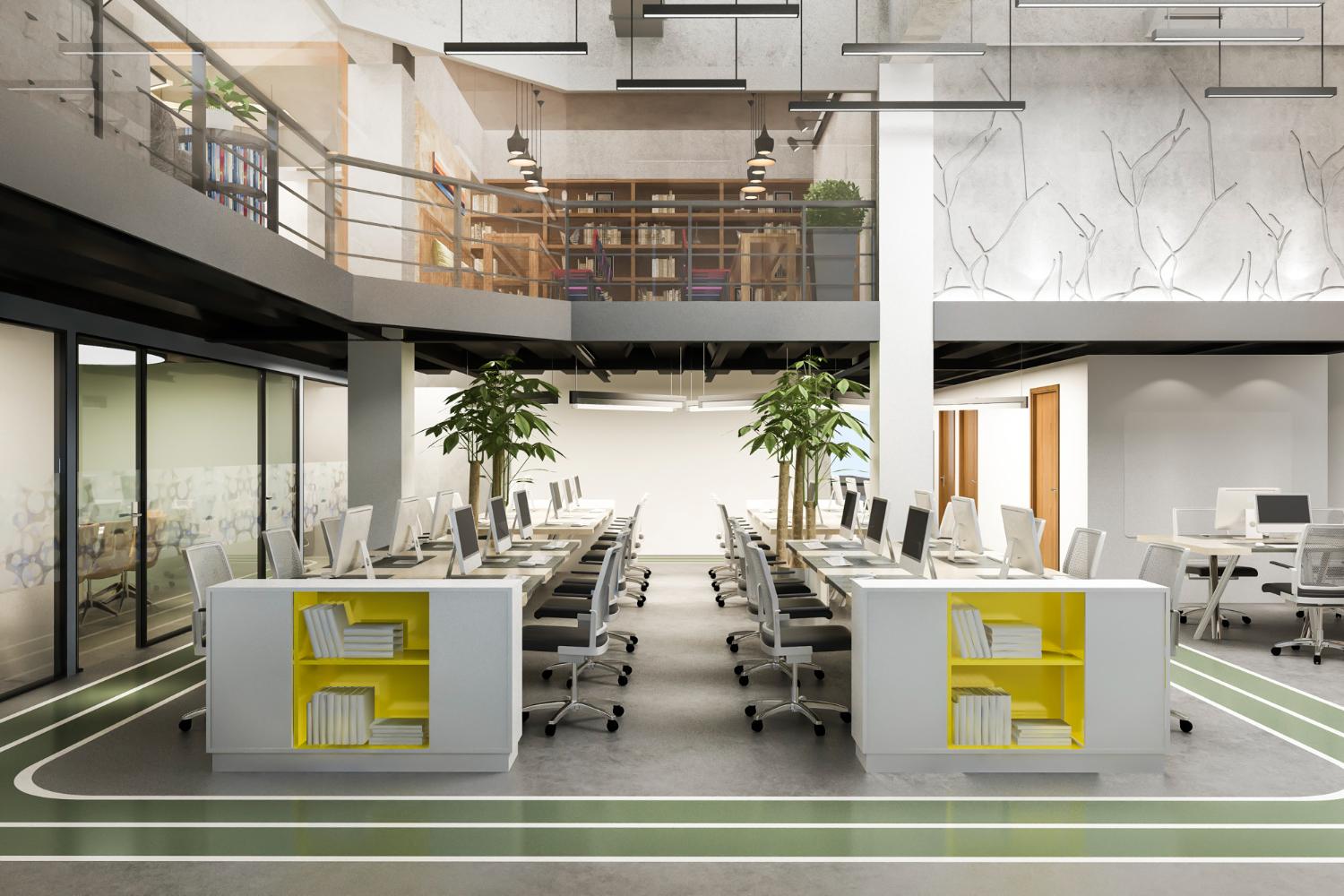
Dubai is a city that thrives on the "new." It is a global capital of innovation, luxury, and visual spectacle. For business owners in the emirate, the pressure to keep up with this aesthetic pace is immense. Walk through the Dubai Design District (d3) or the Dubai International Financial Centre (DIFC), and you will see offices and restaurants that look like art installations.
However, there is a danger in this pursuit of visual perfection. A workspace or retail outlet that prioritizes style over substance is a ticking time bomb. An office might look stunning on Instagram, but if the acoustics make phone calls impossible, productivity flatlines. A restaurant might have trendy velvet chairs, but if they stain easily and cannot withstand high traffic, maintenance costs skyrocket.
This is the central conflict of modern commercial fit-outs: The Trend vs. The Function.
Navigating this conflict is the primary role of professional commercial interior design services. Expert designers do not just decorate; they mediate. They find the sweet spot where cutting-edge aesthetics meet rigorous operational efficiency.
This guide explores how to balance the "wow factor" with the "work factor" to create a commercial space that serves your business for the long term.
The Trap of "Trend-First" Design
Every year, design magazines publish lists of the "hottest office trends." One year it is industrial chic with exposed pipes; the next, it is "resimercial" (residential-commercial) with plush sofas. While these trends can be inspiring, blindly adopting them without considering your specific business needs is risky.
The "Open Plan" Fallacy: For a decade, the trend was to tear down all walls to encourage "collaboration." Many Dubai companies jumped on this bandwagon, only to find that their staff couldn't concentrate due to noise and visual distractions.
- The Trend: Massive, open benches with no dividers.
- The Reality: High stress, lack of privacy, and a need for expensive retrofitting of acoustic pods later.
The "Industrial" discomfort: Exposed concrete and metal look edgy and cool.
- The Trend: Hard surfaces, metal stools, and raw lighting.
- The Reality: In a 9-to-5 environment, this lacks ergonomic support and warmth, leading to employee fatigue and a cold, unwelcoming atmosphere for clients.
Professional commercial interior design services act as a filter. They evaluate a trend not by how it looks in a photo, but by how it impacts human behavior and comfort over an 8-hour workday.
Functionality: The Non-Negotiable Foundation
Before a single piece of art is chosen, a competent design team focuses on the "invisible" infrastructure. This is the functionality layer. In the harsh climate and high-paced business environment of Dubai, this layer must be robust.
- Durable Materiality Dubai is a dusty environment. Sand finds its way everywhere.
- Function: Specifying commercial-grade flooring that is easy to clean and hides dust.
- Trend: High-gloss white floors might be trendy, but they require hourly cleaning to look professional. A designer will steer you toward textured finishes that maintain their appearance with standard maintenance.
- Acoustic Engineering Glass walls are a hallmark of Dubai skyscrapers, offering stunning views. However, glass reflects sound.
- Function: Integrating sound-absorbing materials (baffles, carpet tiles, acoustic wall panels) to manage reverberation.
- Trend: Minimalism often strips away soft furnishings. A designer balances this by hiding acoustic treatment in the ceiling or using micro-perforated wood panels that look sleek but absorb sound.
- The MEP Reality (Mechanical, Electrical, Plumbing) You can have the most beautiful boardroom in the world, but if the AC doesn't work effectively because a trendy bulkhead is blocking the airflow, the room is useless.
- Function: Coordinating the ceiling design with the HVAC engineers to ensure thermal comfort.
- Trend: Complex, multi-layered ceilings. A designer ensures these decorative elements do not compromise air distribution.
The 80/20 Rule: Timeless Base, Trendy Layers
So, should you ignore trends completely? Absolutely not. A space that ignores all trends looks dated the day it opens. The solution offered by top commercial interior design services is the "80/20 Rule."
80% Timeless Base: The expensive, hard-to-change elements should be neutral, durable, and functional.
- Flooring
- Partition walls
- General lighting
- Primary ergonomic furniture (desks and task chairs)
20% Trendy Layers: The elements that are easy to swap out or update should carry the "trend" load.
- Accent Furniture: A trendy armchair in the reception.
- Wall Finishes: A feature wall with the "color of the year" or a biophilic moss wall.
- Lighting Fixtures: Decorative pendants that can be changed without rewiring the ceiling.
- Branding Graphics: Vinyl manifestations on glass that can be peeled off and replaced as your brand evolves.
This strategy allows your office or store to look current and fresh without requiring a full renovation every three years. You simply update the "layer" while the "base" remains solid.
Sector-Specific Balance
The balance between trend and function shifts depending on your industry.
Corporate Offices:
- Trend: The "Metaverse" aesthetic (neon, dark modes, futuristic shapes).
- Function: Hybrid video conferencing.
- The Balance: Use the futuristic aesthetic in the reception and breakout zones to impress clients and attract talent. Keep the workstations and meeting rooms neutral, well-lit, and acoustically perfect for video calls.
Retail and F&B:
- Trend: "Instagrammable moments" (flower walls, neon signs).
- Function: Throughput and durability.
- The Balance: Create one specific corner designed for social media photos to drive marketing. However, ensure the main walkways are wide, the seating is durable leather (not delicate velvet), and the lighting highlights the product/food, not just the decor.
Why You Need Professional Services
Business owners are experts in their product, not in spatial psychology or construction physics. Trying to navigate these trade-offs alone often leads to "Frankenstein" spaces—a mix of disjointed ideas that function poorly.
Investing in commercial interior design services provides you with a strategic partner who:
- Analyzes Data: Uses occupancy studies to determine how much space you actually need, rather than guessing based on trends.
- Values Longevity: Selects materials that come with 10-year warranties, protecting your CAPEX.
- Visualizes the Future: Uses VR and 3D modeling to show you how the space will work, not just how it will look.
Conclusion: Design is a Business Strategy
In Dubai, your commercial space is your business card. It tells your clients that you are modern, relevant, and professional. But it is also your engine room. It needs to support your operations efficiently.
The best design is not the one that wins the most likes on social media; it is the one that improves staff retention, increases sales per square foot, and reduces operational downtime. By prioritizing functionality and layering trends intelligently, you create a space that is both an asset and an experience.
Why Engisoft Interiors is Your Balance Point
At Engisoft Interiors, we specialize in the intersection of aesthetics and engineering. Based in Dubai Silicon Oasis, we provide comprehensive commercial interior design services that prioritize your business goals.
We do not just follow trends; we analyze them. We tell you which ones add value and which ones add cost.
- Strategic Planning: We design for flow, acoustics, and durability first.
- Aesthetic Excellence: We layer on the Dubai-standard luxury and style that your brand deserves.
- Future-Proofing: We build flexibility into the design so you can adapt as the market changes.
Let us build a space that works as hard as you do.

 English
 Arabic
 French
 Spanish
 Portuguese
 Deutsch
 Turkish
 Dutch
Dutch
 Italiano
 Romaian
 Portuguese (Brazil)
 Greek
Greek