
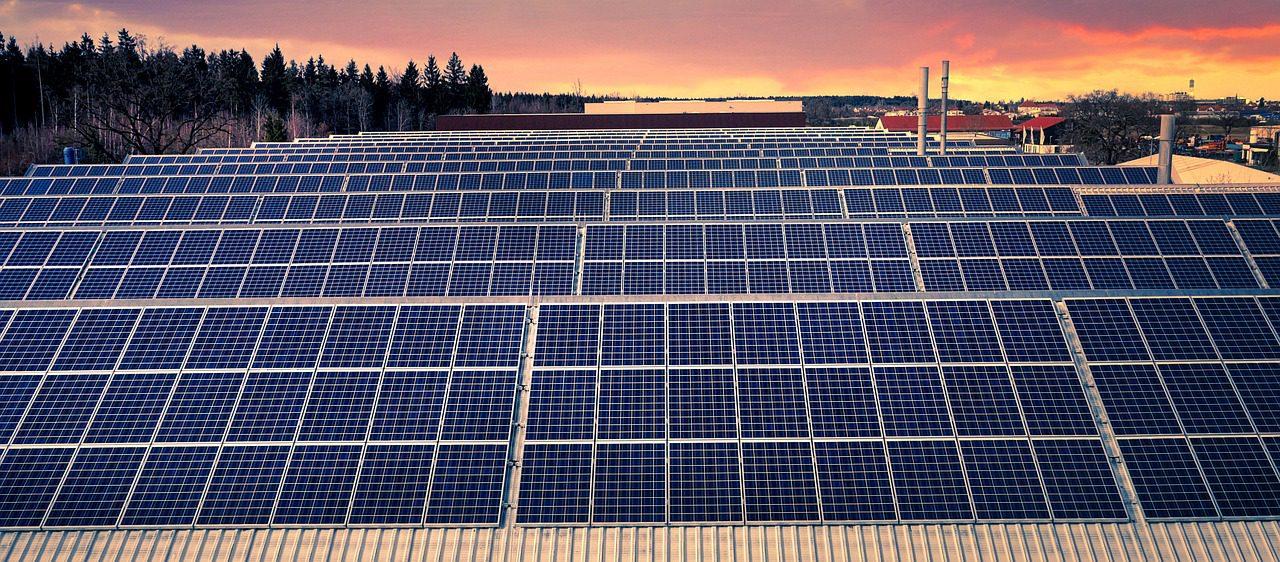
The efficiency of solar energy conversion has long been governed by the theoretical Shockley–Queisser limit, which suggests a maximum efficiency of around 33.7% for a single-junction silicon solar cell. For decades, the industry has pushed toward this boundary. However, the energy demands of a Net-Zero global economy and the extreme requirements of extraterrestrial power generation necessitate breaking this limit altogether.
Centauri Renewable Corp, known for its revolutionary approach to power infrastructure, is spearheading the development and deployment of Next Generation Solar Technology (NGST) that combines advanced material science with multi-layered architectural design. Centauri's strategy is dual-focused: achieving ultra-high efficiency for space-based power systems (Microgravity Power Solutions) and accelerating the commercialization of high-performance, low-cost tandem cells for terrestrial grids.
1. The Multi-Junction Leap: Breaking the Efficiency Ceiling
Centauri's most ambitious solar endeavor is the perfection of Multi-Junction (Tandem) Solar Cells. This technology stacks multiple layers of different semiconducting materials, each tuned to absorb a distinct band of the solar spectrum. By capturing a broader range of the sunlight's energy, these cells dramatically surpass the efficiency ceiling of single-layer technology.
Perovskite-Silicon Tandem Cells (PSTC)
For commercial-scale terrestrial applications, Centauri is aggressively developing Perovskite-Silicon Tandem Cells. Perovskites, a family of crystalline compounds, are the "next big thing" in photovoltaics due to their remarkable characteristics:
-
Complementary Absorption: A wide-bandgap perovskite cell is layered on top of a mature, narrow-bandgap crystalline silicon cell. The perovskite layer captures the high-energy blue and green photons, while the lower-energy red and infrared photons pass through to be captured by the underlying silicon layer.
-
Ultra-High Efficiency: This tandem architecture has already achieved certified efficiencies exceeding 33% in laboratory settings and is rapidly approaching commercial viability for modules in the 26-30% efficiency range. This represents a step-change improvement over the best commercial silicon-only panels (typically $\sim22\%$).
-
Low-Cost Manufacturing: Perovskite films can be manufactured using low-cost, solution-based coating techniques (like roll-to-roll or inkjet printing) at low temperatures, offering a pathway to significantly reduce manufacturing energy consumption and material costs compared to traditional high-temperature silicon wafer processing.
III-V Multi-Junction Cells for Space
For its Microgravity Power Solutions—the orbital solar arrays deployed in Geostationary Earth Orbit (GEO)—efficiency is paramount, and cost is secondary. For this domain, Centauri utilizes advanced III-V semiconductor materials (such as Gallium Arsenide, Gallium Indium Phosphide, and Germanium).
-
Exceptional Radiation Hardness: These cells are inherently more resilient to the intense radiation environment of space, leading to significantly lower degradation rates over the 15-20 year service life of an orbital power station.
-
Extreme Efficiency: Multi-junction cells utilizing these materials (often Triple or Quadruple Junctions) can achieve conversion efficiencies well over 40% in the highly concentrated, unattenuated sunlight of space. This translates directly to reduced launch mass for the orbital power station, making the entire Space-Based Solar Power (SBSP) concept economically feasible.
2. Versatility and Adaptability: New Material Form Factors
Next Generation Solar Technology must be versatile enough to integrate into the entire built environment, not just large solar farms. Centauri is investing heavily in technologies that move PV from a bulky installed product to an integrated building material.
Building-Integrated Photovoltaics (BIPV)
Centauri's BIPV line, branded 'SolarSkin', focuses on aesthetic and functional integration into urban architecture:
-
Transparent PV (Solar Windows): Utilizing new organic and quantum dot materials, Centauri has developed semi-transparent PV films that allow visible light to pass through while capturing invisible ultraviolet (UV) and infrared (IR) light to generate power. This transforms building facades and skyscrapers into power generators without sacrificing light or aesthetics.
-
Flexible and Lightweight Films: Using thin-film deposition techniques, Centauri produces highly flexible and lightweight solar films that can be seamlessly applied to curved surfaces, tensile structures, and the outer skin of next-generation electric vehicles. These films are also the primary material used for the ultra-lightweight, self-assembling structural elements in Centauri's orbital arrays.
Bifacial and Smart Solar Modules
For large-scale ground deployment, Centauri is optimizing the geometry and intelligence of its modules:
-
High-Gain Bifacial Modules: Centauri's bifacial panels capture direct sunlight on the front and reflected light (albedo) from the ground on the back. Coupled with vertical mounting or specialized racking, these systems can generate up to 30% more energy than conventional single-sided panels in reflective environments like snow or light-colored gravel.
-
AI-Driven Performance Optimization: Every Centauri module is integrated with a smart micro-inverter and connected to an AI-powered system that tracks real-time performance, predicts shading patterns, and optimizes the Maximum Power Point Tracking (MPPT) for each individual panel, ensuring the array performs optimally even when partially obscured or degraded.
3. Resilience and Longevity: The Durability Challenge
The transition to new materials, particularly Perovskites, introduces challenges related to long-term stability—specifically degradation from moisture, heat, and UV exposure. Centauri's NGST efforts are focused on solving the durability decade problem.
-
Encapsulation and Barrier Technology: Centauri has developed proprietary nano-laminate encapsulation techniques. These ultra-thin, multi-layer gas and moisture barrier films seal the sensitive perovskite layer, achieving operational lifetimes projected to rival those of conventional silicon (25 years+).
-
Self-Healing Materials: Research is underway to integrate polymer composites with self-healing properties into the protective layers of both terrestrial and space-based cells. These materials can automatically close micro-cracks caused by thermal cycling or micro-meteoroid impacts in orbit, drastically extending the service interval and system reliability.
-
Tandem Cell Durability: The tandem structure itself is leveraged for protection. The bottom silicon cell provides a robust, decades-proven base, shielding the more sensitive perovskite layer from certain environmental stressors, creating a synergistic effect on overall module longevity.
Centauri Renewable Corp's approach to Next Generation Solar Technology is holistic: it is a calculated bet on multi-junction architectures, both Perovskite-Silicon for affordability and III-V for extreme efficiency, paired with innovative form factors for ubiquitous integration. By pushing past the limitations of traditional silicon and simultaneously designing for Earth's grid and the cosmos's challenging environments, Centauri is setting the stage for a world powered by energy conversion efficiencies once thought impossible.

 English
 Arabic
 French
 Spanish
 Portuguese
 Turkish
 Dutch
Dutch
 Italiano
 Russian
 Romaian
 Portuguese (Brazil)
 Greek
Greek