
In the precise world of surgery, every instrument has a specific and critical role. The success of a procedure often depends on the quality and function of the tools in a surgeon's hands. Among the most fundamental and widely used of these is the kelly hemostatic clamp. This versatile forceps is a staple in operating rooms and clinics worldwide, valued for its reliability in controlling bleeding and manipulating tissues. Understanding its design, function, and application reveals why it remains an indispensable part of any surgical toolkit.
Defining the Kelly Hemostatic Clamp
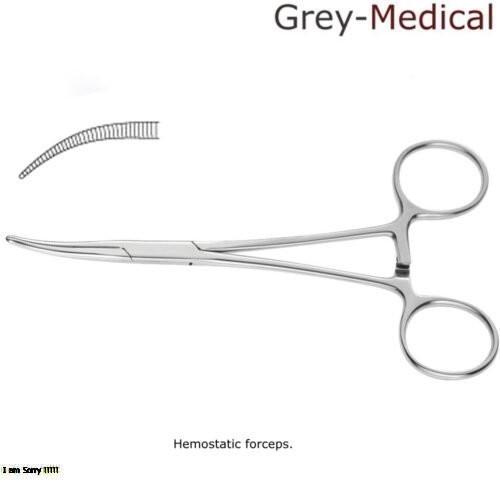
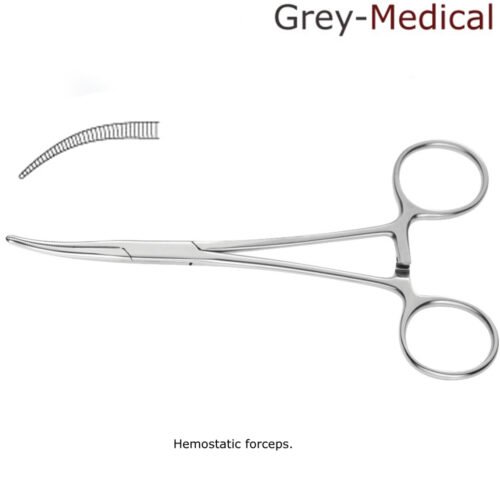
A Kelly hemostatic clamp, often simply called a "Kelly," is a type of surgical forceps designed primarily for hemostasis—the process of stopping blood flow. Its structure is characterized by two long, slender shanks that meet at a hinge, a locking mechanism called a ratchet near the finger rings, and serrated jaws at the tip. The serrations on a Kelly clamp typically run horizontally along half the length of the jaws, which distinguishes it from similar instruments like the Crile clamp, whose serrations run the full length. This design allows for a secure grip on blood vessels with minimal trauma to the surrounding tissue, making it an ideal tool for clamping arteries and veins during various procedures.
The Design: Straight vs. Curved Jaws
The kelly hemostatic clamp is available in two primary variations: straight and curved. Each design serves a distinct purpose, offering surgeons flexibility based on the specific needs of the procedure. Straight Kelly clamps are excellent for grasping and holding tissues or sutures in a straightforward manner, especially on the surface of the surgical field. Curved Kelly clamps, on the other hand, are particularly useful for reaching around structures or clamping vessels in deeper, less accessible areas. The curve allows the surgeon to navigate complex anatomical landscapes without obstructing their view, providing better control and precision where it matters most.
Critical Applications in Surgical Procedures
The utility of the Kelly clamp extends across numerous medical specialties, from general surgery to gynecology and emergency medicine. Its primary function is to occlude blood vessels before they are ligated (tied off) or cauterized, thereby preventing significant blood loss. Beyond hemostasis, surgeons use these clamps for blunt dissection of tissues, allowing them to gently separate tissue planes without cutting. They are also employed to grasp and manipulate tissues, hold sterile dressings, or pass sutures. This multi-purpose functionality makes the kelly hemostatic clamp a true workhorse in both minor and major surgical interventions.
Proper Handling and Sterilization Techniques
The longevity and effectiveness of any surgical instrument, including the right angle surgical clamp depend on proper care and handling. Before and after each use, the instrument must undergo a rigorous cleaning and sterilization process to prevent surgical site infections. This typically involves manual cleaning to remove biological debris, followed by autoclaving (steam sterilization) to eliminate all microorganisms. Surgeons and surgical technicians are trained to handle the clamp with precision, engaging and disengaging the ratchet mechanism smoothly to ensure controlled application and release of pressure. Meticulous maintenance ensures the instrument remains reliable and safe for patient use.
Innovation in Surgical Instrument Craftsmanship
The fundamental design of the Kelly clamp has stood the test of time, but modern manufacturing has brought significant advancements. Companies like GreyMedical®, a privately owned medical technology company dedicated to innovation and excellence in the craft of surgical instruments, are at the forefront of this evolution. By using high-grade stainless steel and refining manufacturing processes, these companies produce instruments that offer superior durability, corrosion resistance, and ergonomic comfort. This commitment to quality ensures that surgeons have access to the most reliable tools, which ultimately translates to better patient outcomes and enhanced surgical safety. The precision of a well-made kelly hemostatic clamp can make a crucial difference in the operating room.
Conclusion
The Kelly hemostatic clamp is more than just a simple tool; it is an extension of a surgeon's hands, enabling precision, control, and safety. Its elegant design, available in both straight and curved forms, provides versatile solutions for controlling bleeding, dissecting tissue, and manipulating delicate structures. As a foundational instrument in countless medical procedures, its importance cannot be overstated. With the continued dedication of innovative manufacturers committed to quality, the humble Kelly clamp will remain an essential and trusted instrument in operating rooms for generations to come, safeguarding patient well-being one procedure at a time.

 English
 Arabic
 Spanish
 Portuguese
 Deutsch
 Turkish
 Dutch
Dutch
 Italiano
 Russian
 Romaian
 Portuguese (Brazil)
 Greek
Greek