
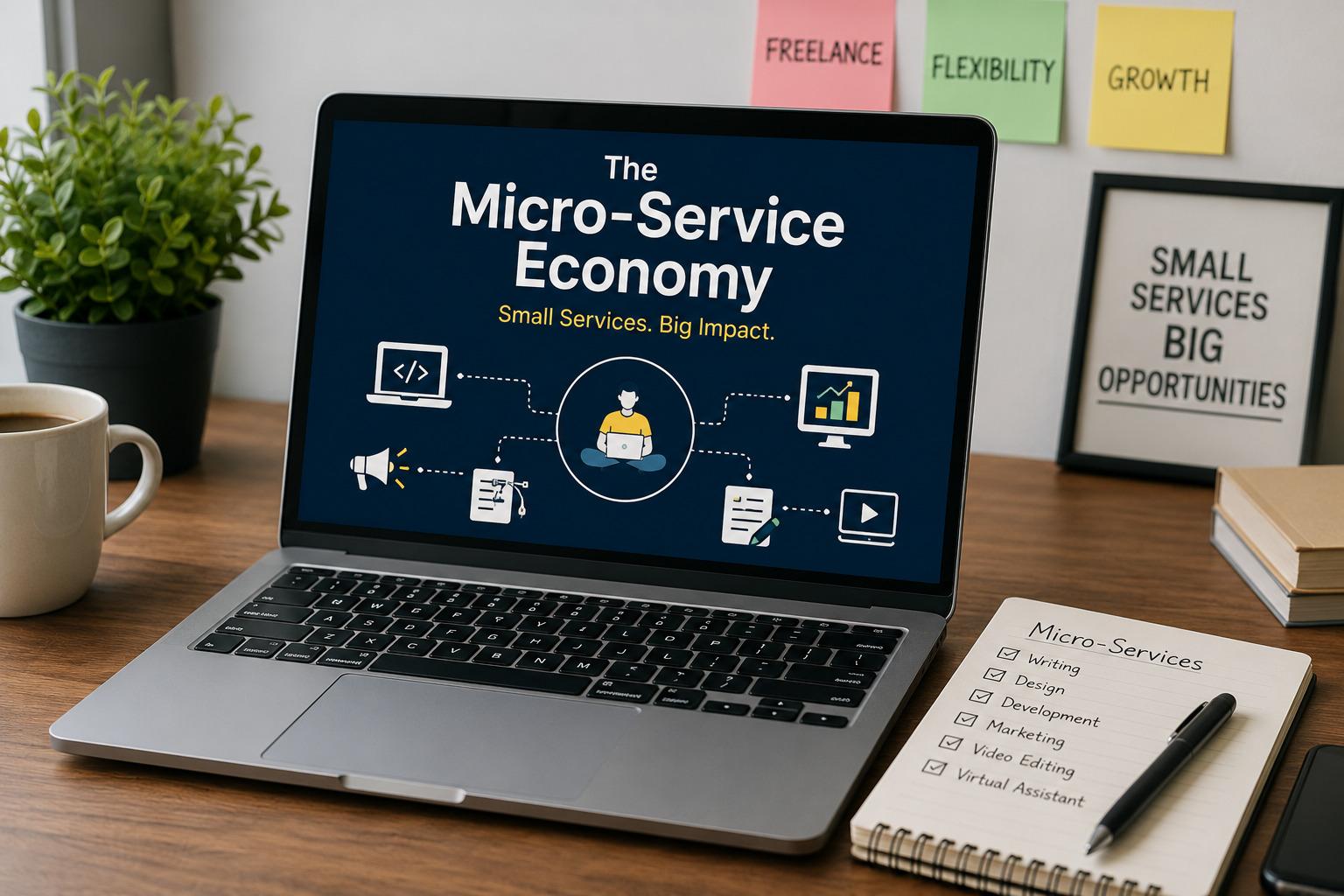
The Micro‑Service Economy: How Hyperlocal Platforms Are Reshaping Urban Life
In the past, getting everyday services often meant making phone calls, asking for local references, or physically visiting shops and offices. Today, a smartphone and an internet connection are usually enough to bring almost anything to your doorstep. This shift has given rise to what many experts call the micro‑service economy—a system where small, focused services are delivered quickly, locally, and on demand.
From ordering food and booking a ride to finding a home cleaner or a personal tutor, people now expect services to be available within minutes rather than hours or days. This expectation is not just about convenience; it is changing how cities function, how people work, and how businesses design their services. The micro‑service economy is quietly becoming one of the most influential forces in modern urban life.
What Is the Micro‑Service Economy?
The micro‑service economy is built around three main pillars:
-
On‑demand access: Services are available when you need them, not only during fixed business hours.
-
Hyperlocal focus: Providers and customers are matched based on proximity, cutting waiting times and travel effort.
-
Digital coordination: Apps and websites act as bridges, handling discovery, booking, communication, and often payment.
Instead of one large company trying to serve an entire city in a slow, centralized way, many smaller or independent providers use digital platforms to reach nearby customers. A carpenter, beautician, yoga instructor, or driver can all operate as independent service providers while still benefiting from the visibility and structure of an online platform.
This model is flexible for both sides. Customers get more choice, while providers can control their working hours and the type of work they accept. It blends elements of freelance work, local business, and platform technology into a new, hybrid form of urban service delivery.
Everyday Examples You Already See
Most people already use micro‑services without thinking about the term. Common examples include:
-
Food delivery apps that connect you to restaurants and home chefs.
-
Ride‑hailing services that replace the need to stand on the street searching for a taxi.
-
Home service platforms offering electricians, plumbers, cleaners, and appliance repair on demand.
-
Learning and wellness apps that help you find tutors, trainers, or therapists nearby for online or in‑person sessions.
There are also more discreet or specialized services that operate on the same principle. Listings for companionship, wellness, or lifestyle services may appear on search results with similar patterns—location‑based keywords, verified profiles, clear pricing, and flexible scheduling. A listing that mentions something like a zirakpur call girl is using the same local‑plus‑service format, even if the nature of the service is different. The underlying trend is the same: clear discovery, easy communication, and quick access.
How Trust Is Built in a Digital Marketplace
For a micro‑service economy to work, trust is essential. You are often inviting a stranger into your home or relying on someone you have never met to handle important tasks. Platforms and providers use several methods to build and maintain that trust:
-
Profiles and verification
Service providers usually have detailed profiles describing their skills, experience, and service areas. Some platforms add ID verification or background checks. This helps customers feel more confident about who they are hiring. -
Ratings and reviews
After each service, customers can rate their experience and leave comments. Over time, this creates a public track record. Providers with consistently high ratings appear more trustworthy, while repeated negative feedback serves as a warning. -
Clear pricing and policies
Transparent pricing—whether fixed, hourly, or range‑based—reduces friction. When customers know what to expect in advance, they are more willing to book. Clear rules about cancellations, refunds, and payment methods also support trust. -
Communication tools
In‑app chat or secure messaging allows customers and providers to clarify requirements, timing, and expectations before meeting. This reduces misunderstandings and helps both sides feel more prepared.
When all these layers work together, the experience feels smoother and safer. Over time, customers start to rely on certain providers or platforms as their “go‑to” options, which strengthens loyalty and stability in the micro‑service ecosystem.
Impact on Work and Income
The micro‑service economy is also reshaping how people work. Instead of traditional full‑time roles, many individuals now piece together income from multiple platforms or services. For example, someone might:
-
Drive for a ride‑hailing service in the morning
-
Do home appliance repairs in the afternoon
-
Offer online tutoring in the evening
This model offers flexibility, especially for those who need to balance work with family responsibilities, education, or other commitments. It also lowers the barrier to entry. People with skills but limited formal qualifications can still participate meaningfully in the economy.
However, this shift also brings challenges:
-
Income can be unpredictable from month to month.
-
Benefits like health insurance, paid leave, or pensions are often not included.
-
Competition can be intense, requiring strong ratings and consistent quality to stand out.
As micro‑services become more common, discussions about worker protections, fair pay, and long‑term sustainability are becoming more important. Some cities and countries are exploring new legal frameworks to better support people working in this flexible, platform‑driven way.
How Cities Are Adapting
Cities are not just passive backdrops to these changes—they are being reshaped by them. When almost every service can come to you, several trends emerge:
-
Less need for personal ownership
If you can quickly book a ride, you may be less inclined to own a car. If you can hire tools, equipment, or expertise when needed, you may buy fewer things outright. -
Changing commercial spaces
Demand for large, traditional storefronts may fall in some sectors as more businesses operate from smaller units, shared spaces, or entirely online. -
More dynamic neighborhoods
Hyperlocal services can bring economic activity to residential areas, not just business districts. A neighborhood might become known for a cluster of certain types of providers, from home chefs to specialized trainers.
Urban planners and policymakers are paying attention to these patterns. The idea of a “15‑minute city,” where most daily needs are available within a short walk or bike ride, aligns well with the micro‑service model. Digital platforms make it easier for small, local providers to reach nearby customers, supporting this vision of compact, self‑sufficient neighborhoods.
Responsible Use and Future Directions
Like any powerful trend, the micro‑service economy brings both opportunities and responsibilities. For customers, responsible use means:
-
Respecting providers’ time and effort
-
Communicating clearly and early about changes or cancellations
-
Providing fair and honest feedback
-
Being mindful of safety and privacy for both sides
For providers and platforms, it means:
-
Being transparent about what is offered and what is not
-
Protecting user data and communication
-
Maintaining fair pricing and payout structures
-
Ensuring quality and consistency in service delivery
Looking ahead, we are likely to see even more integration of technology into micro‑services: smarter matching algorithms, better fraud detection, and tools to support long‑term relationships between customers and trusted providers. At the same time, conversations about ethics, digital well‑being, and work‑life balance will remain crucial.
In the end, the micro‑service economy is not just about speed or convenience. At its best, it connects real people with real skills to others who genuinely need them. When designed and used thoughtfully, it can support more flexible careers, more responsive cities, and a more human‑centered way of accessing services in everyday life.

 English
 Arabic
 French
 Spanish
 Portuguese
 Deutsch
 Turkish
 Dutch
Dutch
 Italiano
 Russian
 Portuguese (Brazil)
 Greek
Greek