
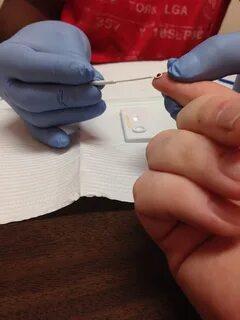
An HIV blood test and false positives is a topic that often creates unnecessary fear because people assume a positive result always means infection. In reality, a reactive or preliminary positive result does not automatically confirm HIV. It is only the first step in a structured diagnostic process designed to ensure accuracy.
Modern HIV Blood Test in Dubai are highly sensitive, which means they are designed to detect even the smallest signs of infection. However, this high sensitivity can sometimes lead to a reactive result that is not truly caused by HIV. This is what is known as a false positive.
Understanding what this means helps reduce panic and provides clarity about the next steps in testing.
What a False Positive HIV Test Actually Means?
A false positive occurs when an HIV blood test shows a reactive or positive result even though the person is not actually infected with HIV. This usually happens during initial screening tests, not confirmatory testing.
It is important to understand that screening tests are designed to be highly sensitive, not fully definitive. Their purpose is to detect any possible sign of HIV so that further testing can confirm or rule out infection.
A false positive is not a diagnosis—it is a signal that further testing is required.
The Two-Step Testing Process That Prevents Misdiagnosis:
HIV diagnosis is never based on a single test. Instead, a two-step process is used to ensure accuracy and eliminate false positives.
The first step is a screening test, often a fourth-generation antigen-antibody HIV blood test. If this test is reactive, a second confirmatory test is performed using a different method.
Confirmatory tests are more specific and are designed to verify whether HIV infection is truly present. Only when both tests agree is a diagnosis confirmed.
This layered approach is one of the reasons HIV testing is considered highly reliable.
Why Screening Tests Can Occasionally Show False Positives?
False positives in HIV screening tests can occur for several biological and technical reasons. One of the most common causes is cross-reactivity, where the test mistakenly reacts to antibodies from other conditions.
Certain infections, recent vaccinations, autoimmune disorders, or even pregnancy-related immune changes can sometimes influence test results.
However, these reactions are rare, and modern HIV testing technology has significantly reduced their occurrence.
The Role of Highly Sensitive Testing Technology:
Modern HIV blood tests are designed to detect infection as early as possible. Fourth-generation tests identify both HIV antibodies and the p24 antigen, making them extremely sensitive.
This high sensitivity improves early detection during the window period but also slightly increases the chance of reactive results that are not true positives.
This is a trade-off in medical diagnostics: higher sensitivity ensures fewer missed infections but requires confirmatory testing to rule out false alarms.
How Confirmatory Testing Resolves Uncertainty?
When a screening test shows a reactive result, confirmatory testing is used to determine the final outcome. These tests are highly specific and use different detection methods to avoid cross-reactivity.
Common confirmatory tests include antibody differentiation assays and nucleic acid tests, which detect HIV genetic material directly.
If the confirmatory test is negative, the initial result is classified as a false positive. If it is positive, the diagnosis is confirmed.
This step ensures that no HIV diagnosis is made based on a single uncertain result.
Emotional Impact of a Reactive HIV Test Result:
Receiving a reactive HIV blood test result can be emotionally overwhelming. Many people immediately assume they are infected, which can lead to anxiety and stress.
However, it is important to remember that this is only a preliminary result. In many cases, especially in low-risk individuals, reactive screening results are later proven to be false positives after confirmatory testing.
Healthcare providers are trained to explain this process clearly and provide emotional support during the waiting period.
Common Situations That May Trigger False Positives:
Although rare, certain conditions can influence HIV test results. These include recent viral infections, autoimmune conditions, or recent immunizations that may temporarily affect antibody levels.
Pregnancy can also sometimes influence immune system activity, which is why confirmatory testing is especially important in prenatal screening.
Even laboratory factors such as sample handling or technical variations can occasionally contribute to reactive results, although strict quality control reduces this risk significantly.
Why Risk Level Matters in Interpreting Results?
A person’s risk level plays an important role in understanding HIV test results. Individuals with no known exposure risk who receive a reactive screening result are statistically more likely to have a false positive.
On the other hand, individuals with recent high-risk exposure require careful evaluation and follow-up testing to confirm or rule out infection.
This is why HIV results are always interpreted alongside medical history and risk assessment.
The Importance of the Window Period in Testing Accuracy:
The HIV window period also plays a role in testing interpretation. This is the time between exposure and when HIV becomes detectable in the body.
During this period, test results may be negative even if infection is present. Conversely, in rare cases, immune system activity during early response may contribute to reactive screening results.
Understanding the window period helps prevent misinterpretation of both false negatives and false positives.
How Often False Positives Actually Occur?
False positives in HIV blood tests are very rare due to modern testing technology. The specificity of confirmatory tests is extremely high, meaning they are designed to accurately rule out non-infections.
Most reactive screening results are resolved during confirmatory testing and do not lead to a final HIV diagnosis.
This makes the overall HIV testing process highly reliable when all steps are completed correctly.
What You Should Do After a Reactive Test Result?
If you receive a reactive HIV blood test result, the most important step is to remain calm and wait for confirmatory testing. Avoid self-diagnosis or assuming the worst outcome before final results are available.
Follow-up testing will determine whether the result is a true positive or a false positive. In many cases, no infection is found after confirmatory analysis.
Healthcare providers will guide you through the next steps and provide support throughout the process.
How Medical Guidelines Prevent Misdiagnosis?
HIV testing protocols are designed with multiple safeguards to prevent misdiagnosis. No single test is ever used to confirm HIV infection.
The combination of sensitive screening tests and highly specific confirmatory tests ensures that false positives are identified and corrected before any diagnosis is made.
This structured approach is a key reason why HIV testing is considered one of the most reliable diagnostic systems in modern medicine.
Modern Improvements That Reduce False Positives:
Advancements in HIV testing technology have significantly reduced the rate of false positives. Improved antigen-antibody detection, better laboratory automation, and enhanced quality control systems all contribute to higher accuracy.
Fourth-generation tests have also improved early detection while maintaining strong specificity.
These advancements mean that while false positives can still occur, they are increasingly uncommon.
Final Thoughts: Understanding the Process Reduces Fear
An HIV Lab tests and false positives are closely linked through the diagnostic process, but a reactive result is not a final diagnosis. It is only the first step in a careful, multi-stage evaluation designed to ensure accuracy.
Confirmatory testing, medical assessment, and advanced laboratory methods all work together to eliminate uncertainty and prevent misdiagnosis.
Understanding this process helps reduce fear, prevents misunderstanding, and ensures that individuals respond to test results with clarity rather than panic.
In the end, HIV testing is not about a single result—it is about a complete, reliable system designed to protect your health with precision and care.

 Arabic
 French
 Spanish
 Portuguese
 Deutsch
 Turkish
 Dutch
Dutch
 Italiano
 Russian
 Romaian
 Portuguese (Brazil)
 Greek
Greek