
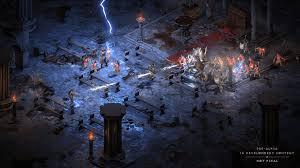
Long before the first monster falls, before the first unique item drops, something else reaches out to claim the player’s attention. It begins with a single, haunting guitar note. The strings of the Rogue Encampment theme drift through the speakers, weaving a melody that is at once mournful and hopeful, a dirge for a world already lost and a hymn for those still fighting. In Diablo 2 Resurrected, music is not merely background noise. It is the soul of the experience, the invisible thread that binds every moment of terror, triumph, and despair into a cohesive journey through the darkness of Sanctuary.
The original compositions by Matt Uelmen have achieved legendary status within gaming circles. The acoustic guitar work that defines the first two acts remains instantly recognizable, a sound that evokes dusty deserts, corrupted monasteries, and the fragile sanctuaries where humanity clings to existence. The Tristram theme, in particular, has transcended the game itself, becoming a cultural touchstone recognized even by those who have never ventured beyond the Blood Moor. Its melancholic strings and steady rhythm speak to the core tension of the series: the relentless cycle of darkness rising and heroes falling. When Diablo 2 Resurrected was announced, the question of how the music would be handled was as pressing as any graphical update. The answer was reverent preservation. The original recordings were remastered with care, their integrity intact but their richness deepened, allowing the compositions to resonate with a clarity that matches the enhanced visuals.
The marriage of sound and environment in Diablo 2 Resurrected creates an atmosphere that modern action RPGs rarely achieve. Consider Act Two. The player emerges from the sewers of Lut Gholein into the desert, and the music shifts seamlessly from the claustrophobic tension of underground tunnels to the expansive, percussive rhythms of the open sands. Wind howls across the Rocky Waste. The distant cry of a carrion bird punctuates the silence. In the harem, muffled voices and the rustle of silks precede the sudden shriek of a greater mummy raising skeletal warriors. Every location has its own sonic identity, a carefully constructed soundscape that informs the player about the world before any text or dialogue does. The remastered audio in Diablo 2 Resurrected brings these details forward, allowing the environmental storytelling to land with greater impact than ever before.
One of the game’s most effective techniques is its use of silence and restraint. Extended periods of exploration are accompanied only by ambient sounds: dripping water in the Jail, crackling flames in the River of Flame, the distant chittering of maggots in the Dry Hills. This absence of music builds tension, making the eruption of combat feel visceral. When a pack of Fallen shaman cackles and ignites a nearby shaman, the sudden burst of sound is jarring. When Mephisto’s voice echoes through the Durance of Hate before his chamber is even in sight, the player understands that something truly malevolent awaits. The game understands that fear thrives in anticipation, and its sound design exploits this principle masterfully.
For veterans who first experienced these sounds through tinny computer speakers or headphones plugged into CRT monitors, returning to Sanctuary in Diablo 2 Resurrected is an emotional experience. The remastered audio, much like the updated graphics, offers a new perspective on something deeply familiar. That first guitar note still carries the same weight, the same promise of adventure and peril. New players, experiencing Uelmen’s work for the first time, discover a score that stands alongside the greats of any medium. In an industry where music is often treated as disposable,diablo2 resurrected serves as a reminder of what is possible when sound is treated as essential craft. The darkness of Sanctuary is eternal, but it is the music that gives that darkness its voice.

 English
 Arabic
 Spanish
 Portuguese
 Deutsch
 Turkish
 Dutch
Dutch
 Italiano
 Russian
 Romaian
 Portuguese (Brazil)
 Greek
Greek